
Subscribe for more!
Subscribe to our newsletter for insights and articles on wide ranging issues including reputation management, branding, advertising, awareness, advocacy, and communications. You can unsubscribe anytime.
Follow us on social:


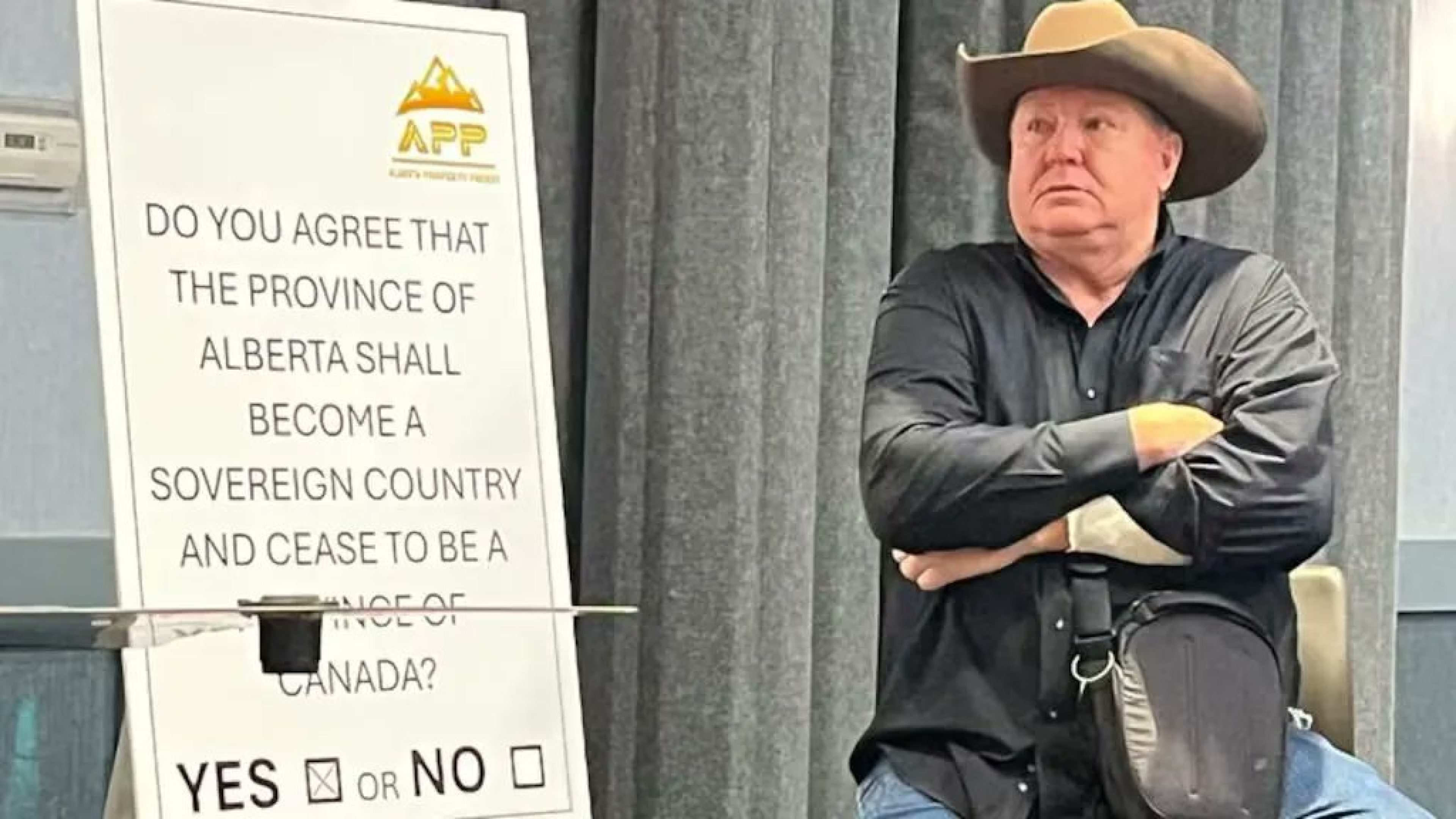
71% of Albertans don't want to leave Canada. 17% do. Who can influence the other 12% and what will matter to them?
120 years ago Alberta became a Canadian province. This year, residents may or may not have a vote on whether they want to remain.
The proposed questions of the Smith government aren’t directly on this question - they fog the lens with language which implies that Alberta can be both sovereign and stay within Canada. The outcome of these questions will be subject to different interpretations, which I suppose is the point of the wording that has been released.
But it’s worth taking stock on where people would be, if there was a simple, clear question: do you want Alberta to separate from Canada? (We asked, in a recent Spark Insights survey of 531 Albertans, online, between April 2-6)
As things now stand, 71% say they do not want to go. Most Albertans think it would be bad for Alberta’s economy and for their own personal finances. For every Albertan who thinks they would be better off, two think they would be worse off.
If you’re a federalist, these are encouraging numbers. But not table- poundingly reassuring. The majority who see separation as bad for Alberta is in the 50’s not the 60% or 70’s or 80’s. So it’s vital to take the risk seriously, and build stronger confidence in the value of the economic and social unity.
How to do that best is a combination of what arguments to offer, and who will be most credible and impactful.
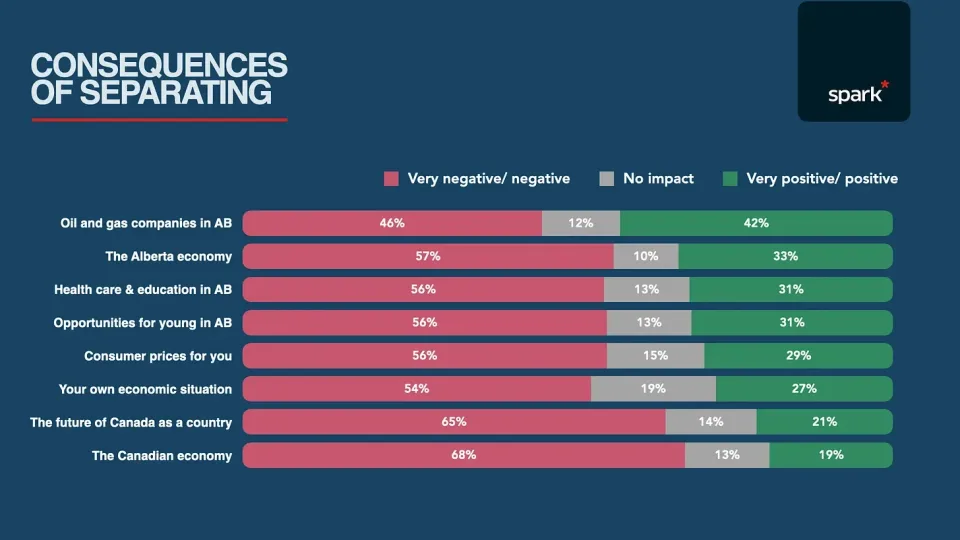
Carney, Poilievre, and Stephen Harper all have a good level of “trust to have ideas that are in the interests of Albertans”. It’s unusual for a Canadian Liberal PM to be in this range, but it’s also unusual for a Liberal PM to have grown up in Alberta.
Nenshi and Smith have fairly similar trust levels, with Smith showing the effects of more polarization. Jason Kenny and Preston Manning are a little further down the trust list.
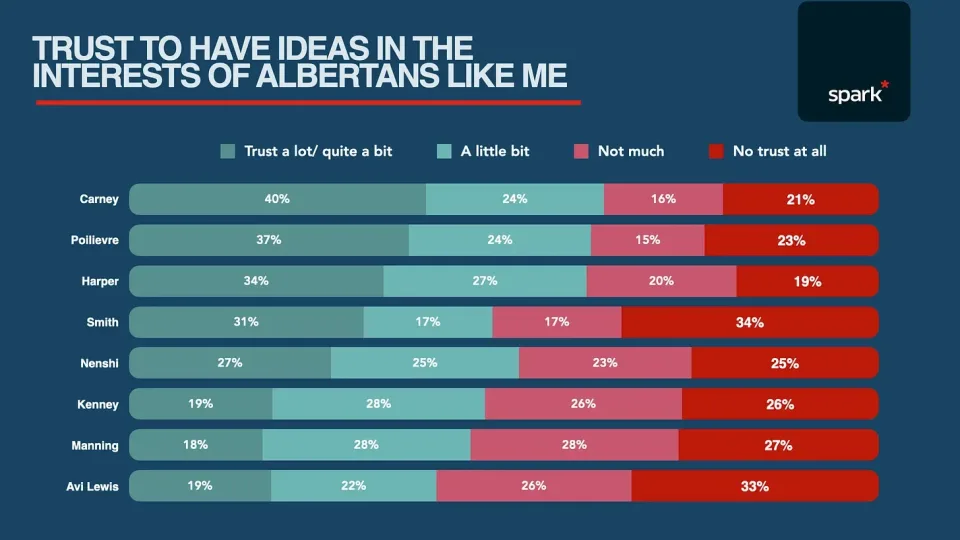
However useful it is, to look at the province as a whole it’s more important to look at those who are separatists or open to separatism.
THE COMMITTED SEPARATISTS (17%)
The committed separatist group numbers 17%. (That’s 7 points lower than the hard separatist support in Quebec.)
They are overwhelmingly convinced that separation will be good for Alberta’s economy (86%), good for oil and gas companies (87%), provide more opportunities for young people (88%) and improve their personal finances (78%).
It might not be possible to persuade these folks to reconsider - but if it was possible it would probably rest on an economic harm argument delivered by Conservative Alberta politicians and Alberta businesses.
THE NOT SURE (12%)
There’s a soft middle group - 12% who “aren’t sure” if Alberta should separate. (While our province wide sample is a decent size, this sub sample is small and so let’s take this with some salt) It looks like this group are largely urban and suburban young people, and include more women than men. They lean right (49%) but not as much as the hard separatist group (62%). 42% say they live on the centre of the spectrum.
They are struggling with the cost of living.
They aren’t convinced things would be better if Alberta were to separate, but they don’t dismiss the possibility. 46% say separation would be good for the Alberta economy, 51% say it would be good for oil and gas companies, and 42% say it would be better in terms of the opportunities for young people.
They tend to trust Poilievre, Smith, and Harper. Alberta politicians, and conservative ones are the most influential voices with this group.
THE IMPACT OF GENERATION
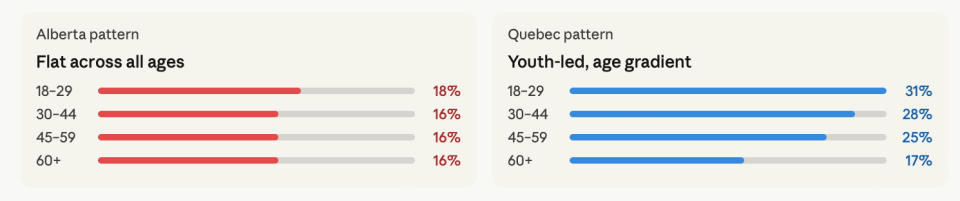
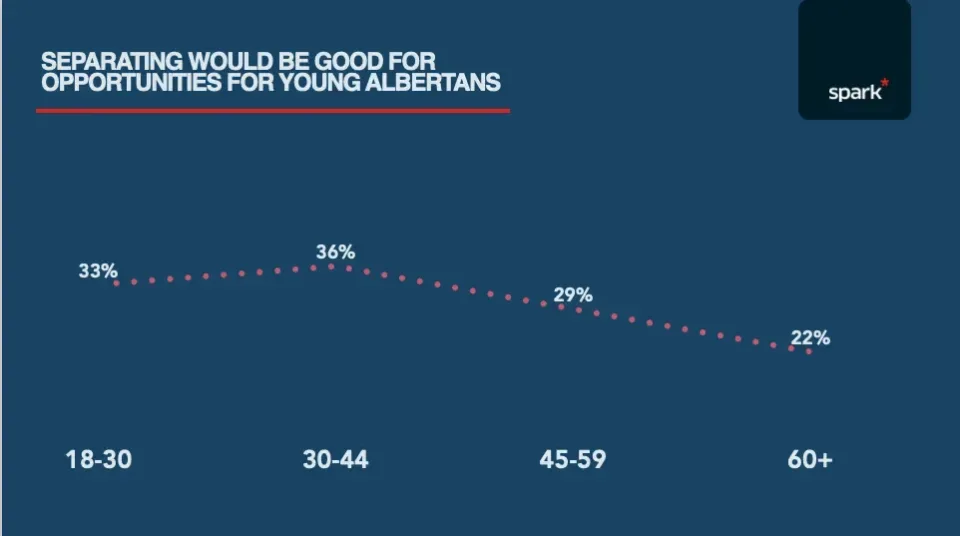
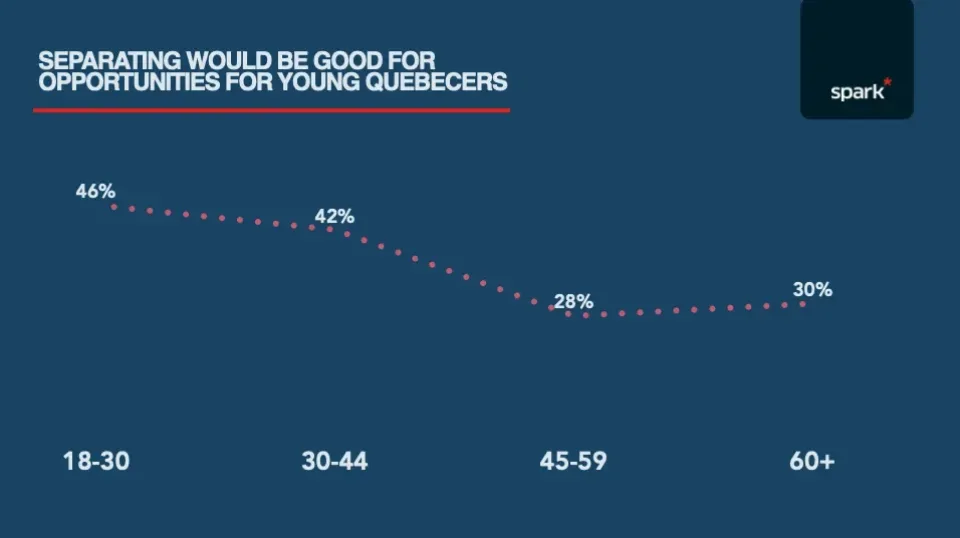
Separatism in Alberta and Quebec is linked to age, but in different ways.
In Quebec, young people tend to be the most tempted by the separatist argument, mostly because of economic fatigue. Older Quebecers are more convinced that remaining within Canada is the better choice for the times.
In Alberta, the age relationship is more muted. Under 30 voter reveal relatively high trust in Carney and in this age cohort there is a substantial number of progressive voters. There’s a temptation among the young to think separatism might be helpful, but it’s a milder influence than in Quebec.
There’s more work to do to understand how to make a convincing economic self interest argument to young people in both provinces. Young people are more open to what others see as risky ideas, if they feel the status quo isn’t working for them.
THE BOTTOM LINE
While national unity often plays out as a series of conversations about jurisdiction, constitutional adjustments, funding arrangements, as well as emotions. this current situation feels different.
The overall uncertainty in the global economy and world order is definitely making people hesitant to consider a change into unknown territory. At the same time, the way people understand their economic situation tends to be cloudier these days and young people in particular are less sure that the broader context of the Canadian relationship is vital to their getting ahead. In both provinces where there might be a referendum, few seem to be approaching it looking for a constitutional fix, even if the Smith government questions point towards power sharing understandings.
To the extent that there may be battles in both provinces, the big questions that will shape soft opinion one way or the other will be about the economic choice, and young people will look like swing voters. The voices that will have the most impact are those businesses and politicians who can speak to provincial economic risks. This is not about wanting to stay in Canada or not - it’s about wanting to thrive.
spark*insights is led by Bruce Anderson, one of Canada’s leading and most experienced public opinion researchers. From polling and research to analysis and guidance, we help organizations, uncover the factors driving or influencing public perception to gain valuable insights into the shape and movement of the landscape.
Tell us your needs, challenge us with your project, get an estimate, come for a coffee and a chat (or reach out for a virtual one)!
Address: 71 Bank Street, 6th Floor, Ottawa, Ontario, K1P 5N2
Email: hello@sparkadvocacy.ca
Telephone: (613) 367-5513
Follow us on social:


© 2026 spark*advocacy Inc., All rights reserved.