
Subscribe for more!
Subscribe to our newsletter for insights and articles on wide ranging issues including reputation management, branding, advertising, awareness, advocacy, and communications. You can unsubscribe anytime.
Follow us on social:


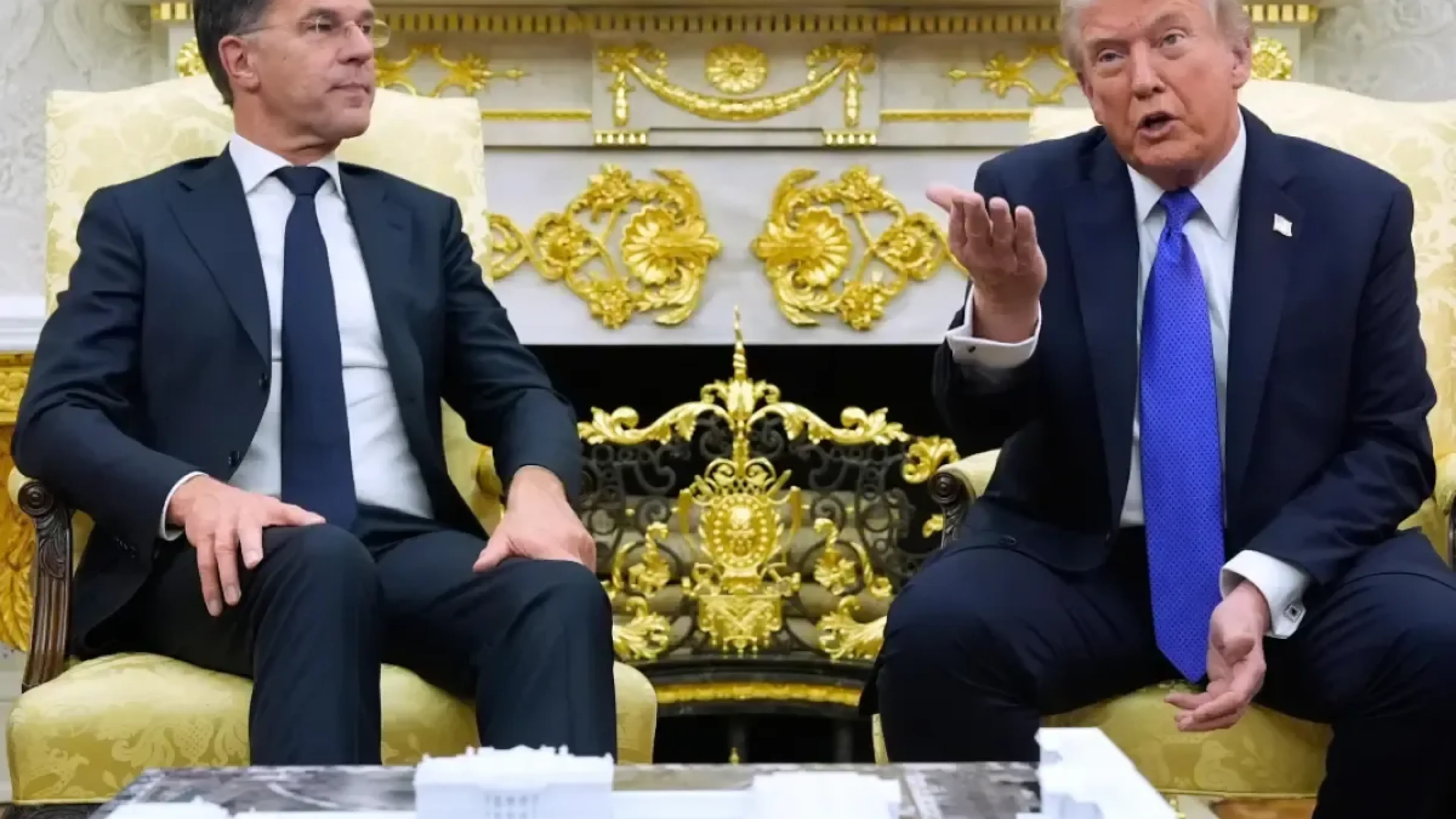
The Iran war has added fuel to Trump's anger with NATO, and to Canadians' feelings that the US can no longer be considered a reliable ally.
Formed in 1949, in the wake of a world war which cost tens of millions of lives, 12 countries signed the NATO charter in Washington, D.C. The aims were to deter Soviet expansionism, to prevent the rise of nationalistic militarism in Europe, and to promote European integration.
A lot has changed, in Trump’s America.
Today, Trump is an objective ally of the Russian dictator Putin. The US President is deeply critical of the UK and France, while paying homage to Victor Urban, who has undermined NATO repeatedly. Trump mocks the EU and was a vocal supporter of Brexit.
His approach to NATO allies has been to bully and threaten.
This week, he was irate that NATO members didn’t do his bidding in the chaotic and poorly thought out war he started with Iran.
Canadians mostly don’t like Trump.
In our latest survey (online, 4000 interviews, April 4-8, 2026) 17% have a positive feeling about the US leader, while 77% have a negative view. He does a little better among young men (30% like him) and Conservative voters (25%). But overall, people here in Canada have had more than enough. Few (16%) express much confidence in how he approached the Iran war.
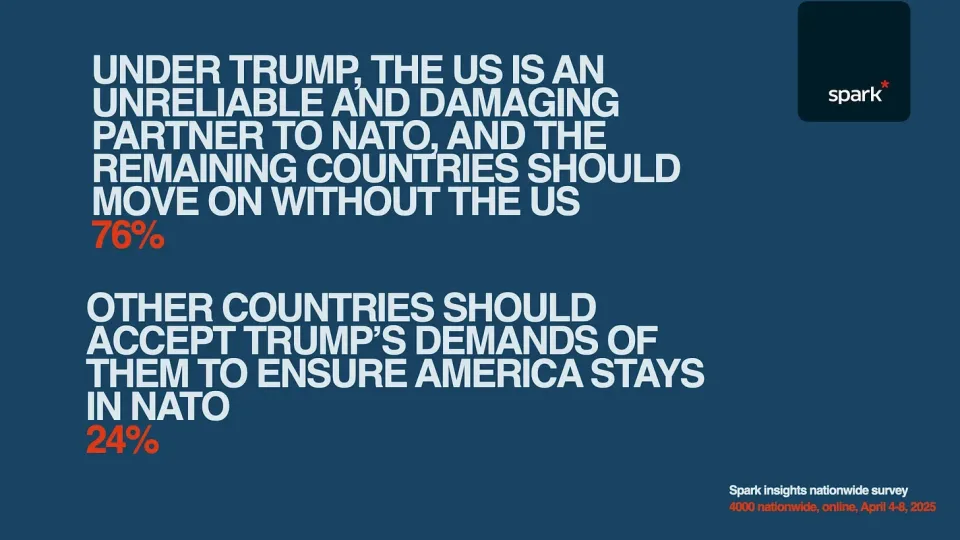
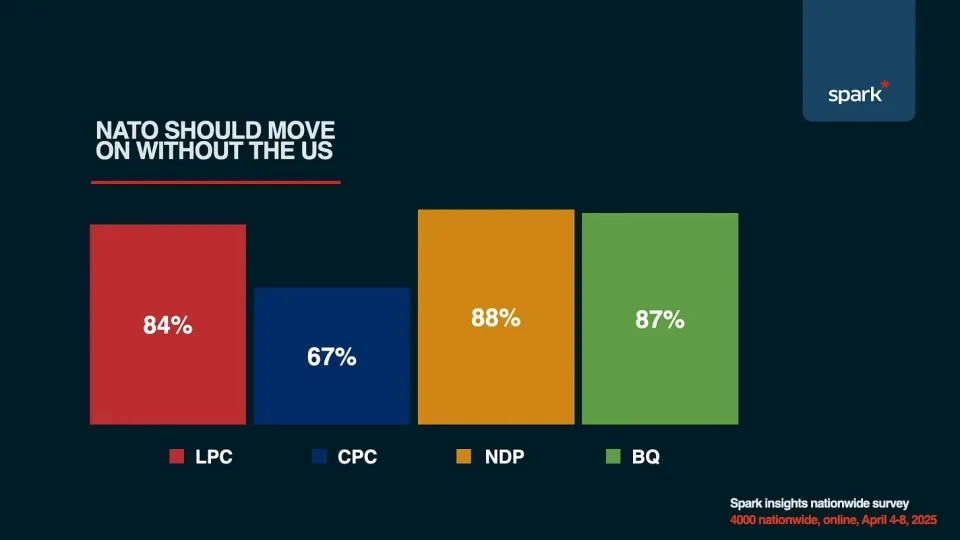
When asked to choose between two points of view about Trump’s criticisms of NATO, the mood was blunt. Only 24% felt “other NATO countries should accept Trump’s demands of them in order to ensure America stays in NATO” while 76% said “Under Trump’s leadership, the US is an unreliable and damaging partner to the NATO alliance and the remaining countries should move on without the US in the future”. This was the majority view across party lines, including 67% of Conservative voters.
Now, none of this is to suggest that Canadians have reviewed and carefully considered what it would mean to have a NATO without the US. No one has really mapped out what that would look like and how it might affect our sense of security, or our sense of feeling that we were in a productive and positive “alliance” of like minded countries.
What it does reveal is the extent to which Canadians have arrived at the view that as long as America is run by this one individual, our economic or security interests are more vulnerable to his whims, and our interests may be better served by imagining new relationships, whether in trade or security matters.
spark*insights is led by Bruce Anderson, one of Canada’s leading and most experienced public opinion researchers. From polling and research to analysis and guidance, we help organizations, uncover the factors driving or influencing public perception to gain valuable insights into the shape and movement of the landscape.
Tell us your needs, challenge us with your project, get an estimate, come for a coffee and a chat (or reach out for a virtual one)!
Address: 71 Bank Street, 6th Floor, Ottawa, Ontario, K1P 5N2
Email: hello@sparkadvocacy.ca
Telephone: (613) 367-5513
Follow us on social:


© 2026 spark*advocacy Inc., All rights reserved.