
Subscribe for more!
Subscribe to our newsletter for insights and articles on wide ranging issues including reputation management, branding, advertising, awareness, advocacy, and communications. You can unsubscribe anytime.
Follow us on social:


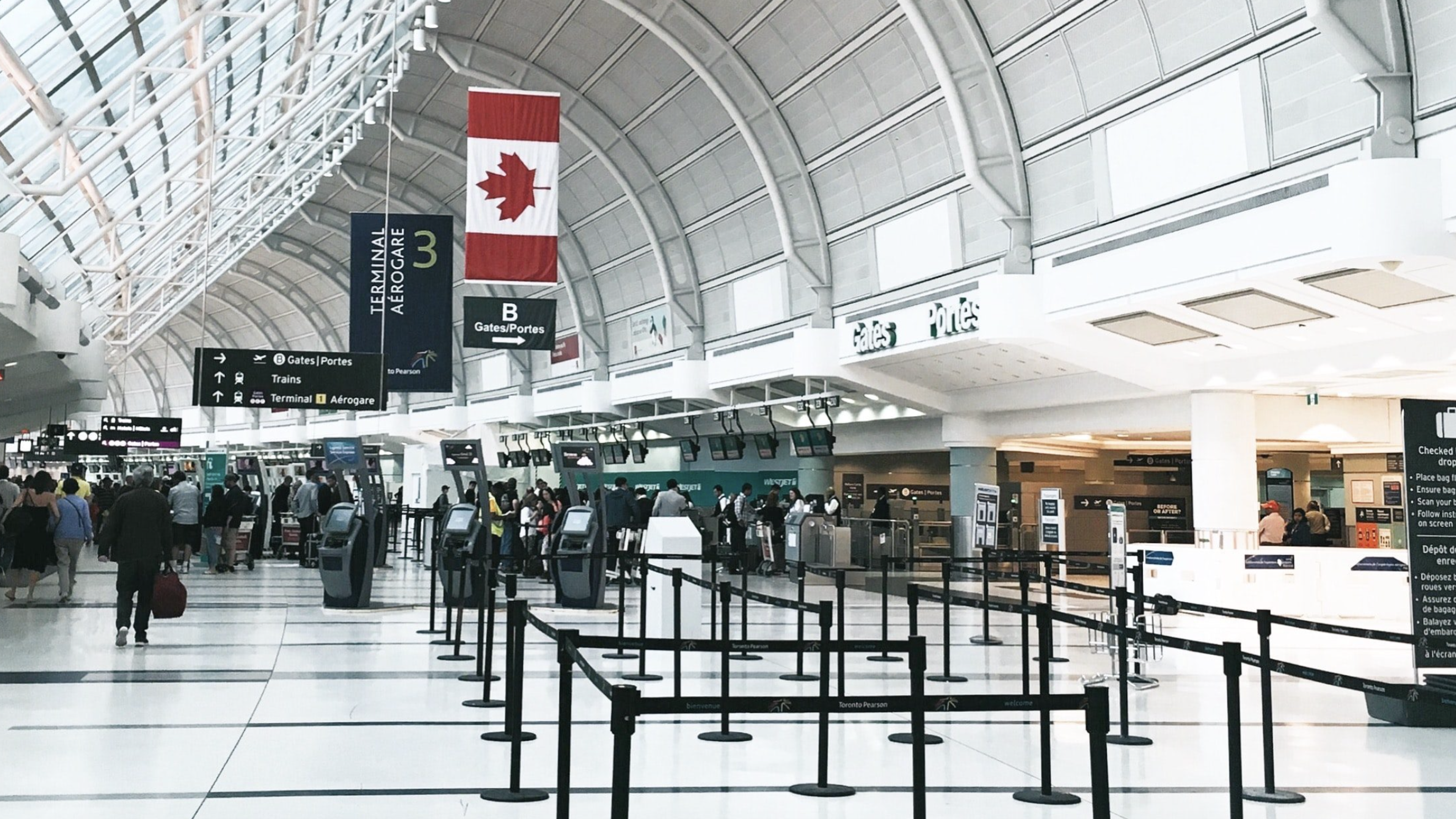
Details around service standards and price impacts will matter, but the public instinct is less anxiety and more willingness to imagine the upsides of change.
One of my early polling experiences was around the privatization of Air Canada in 1988. Prime Minister Mulroney had made the case that the public no longer needed to, or should, own and operate the airline.
Canadians were somewhat hesitant at first – worried that something important to our sense of national pride and cohesion might be lost. But they were also open to Mulroney’s argument that the public interest would be better served by putting them on the market. Mulroney had won office pitching free trade, free enterprise and balanced budgets.
Privatization was a logical extension of his desire to shrink the role and cost of government, especially given that the carrier had made no secret of the fact that it would soon need major capital infusion to modernize its fleet.
Now - years later - that decision is no longer controversial. There’s no evidence the public would re-nationalize Air Canada.
There will always be a part of the population that has a rigid mistrust of business, but that part of the population is smaller than it used to be. Compared to 25 years ago, there’s more pragmatism and less ideology. And certainly more hesitation about government ownership of business that operate in competitive marketplaces.
People have more confidence that regulation can usually solve for public priorities, and meanwhile there are plenty of competing demands for public funds.
This attitude is likely to surround the debate about the future of Canada’s airports, which kicked off this week with an announcement by Prime Minister Carney that the government would look at alternatives to the current operating model for Canada’s four largest airports.
What Carney is proposing is not an experiment, but something with a track record that can be studied carefully. As he said, Canada can learn from the experiences of others and make the best possible choices.
Many of the major airports that Canadians are familiar with around the world are owned and/or operated by private companies including Heathrow, Gatwick, Manchester, London Stansted, Rome, Porto, Vienna, Lisbon, Copenhagen, Istanbul, Santiago. Lots have earned awards for traveler satisfaction.
While most people don’t know the ownership structure of airports, including our own, the early evidence is that they will be open to this idea.
Earlier this summer (July 3-12, 2026, 2950 interviews online, nationwide), spark* completed some national survey work for IFM Investors, a company established by pension funds in Australia. IFM operates airports in Melbourne, Brisbane, Perth, Manchester, London, Stanstead, Vienna, Toluca and Malta.
We explored how Canadians feel about the idea of government entering long term leases with companies which have experience as airport operators. Here’s some highlights from what we found:
· 79% think new investment in our airports is important over the next 10 years.
· 76% believe “infrastructure would be operated more efficiently if done by a pension fund or other investor that has experience operating infrastructure”
· 78% feel “government can protect the national or public interest just as well through regulation as through direct operation.”
· 79% believe “as long as government continues to own infrastructure, leasing out the operation of it makes a lot of sense.”
· 78% say “allowing pension funds to invest in existing infrastructure is a good way to raise money that could be spent on new infrastructure.”
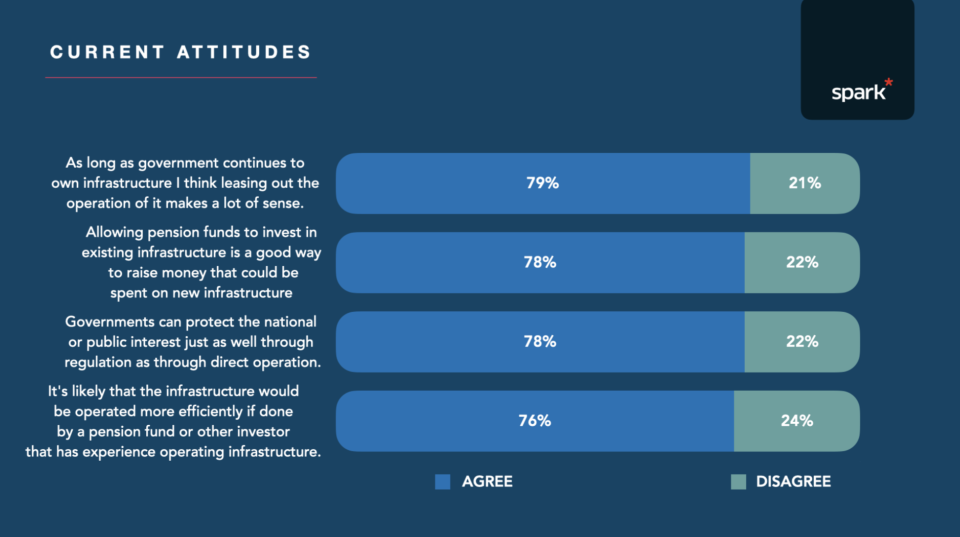
There’s a uniformity to these results which suggests a broad openness to the idea. That doesn’t mean there won’t be any debate or that the details don’t matter. But the first public instinct is less a fear about how private operators would manage airports, and more a willingness to hear how it might be better. People will naturally want to know that service standards and passenger costs will have guardrails.
Roughly 75% say that a range of steps government could take, such as regulating service standards and consumer costs would increase their comfort level with private operation of airports in Canada.
Canadians are in a mood to step on the gas, not on the brake, when it comes to ideas that could build up our economy for the long term. Anxiety about change has been replaced by a belief that we can – and should - find ways to do better, to raise our ambition. And the more we can do without using taxpayer dollars or debt, the better.
This nationalism-inflected pragmatism has also been unifying politically. We see Conservative and NDP Premiers working on projects together with the federal government. We hear it in the comments of former PM Harper and the former leader of the NDP, Thomas Mulcair.
In the months since Mark Carney became Prime Minister, public confidence in this direction is up and political polarization is down. People are willing to consider ideas they might have hesitated about in the past, and they like the idea of government moving at pace.
spark*insights is led by Bruce Anderson, one of Canada’s leading and most experienced public opinion researchers. From polling and research to analysis and guidance, we help organizations, uncover the factors driving or influencing public perception to gain valuable insights into the shape and movement of the landscape.
Tell us your needs, challenge us with your project, get an estimate, come for a coffee and a chat (or reach out for a virtual one)!
Address: 71 Bank Street, 6th Floor, Ottawa, Ontario, K1P 5N2
Email: hello@sparkadvocacy.ca
Telephone: (613) 367-5513
Follow us on social:


© 2026 spark*advocacy Inc., All rights reserved.